BUYING GUIDE · September 15, 2026
How to Choose a Portable Tire Inflator (2026): PSI, Speed and What the Listings Don't Say
A guide to duty cycle, PSI limits, and cordless vs. 12V tradeoffs across four reviewed portable tire inflators for cars, SUVs, and bikes.


Quick answer
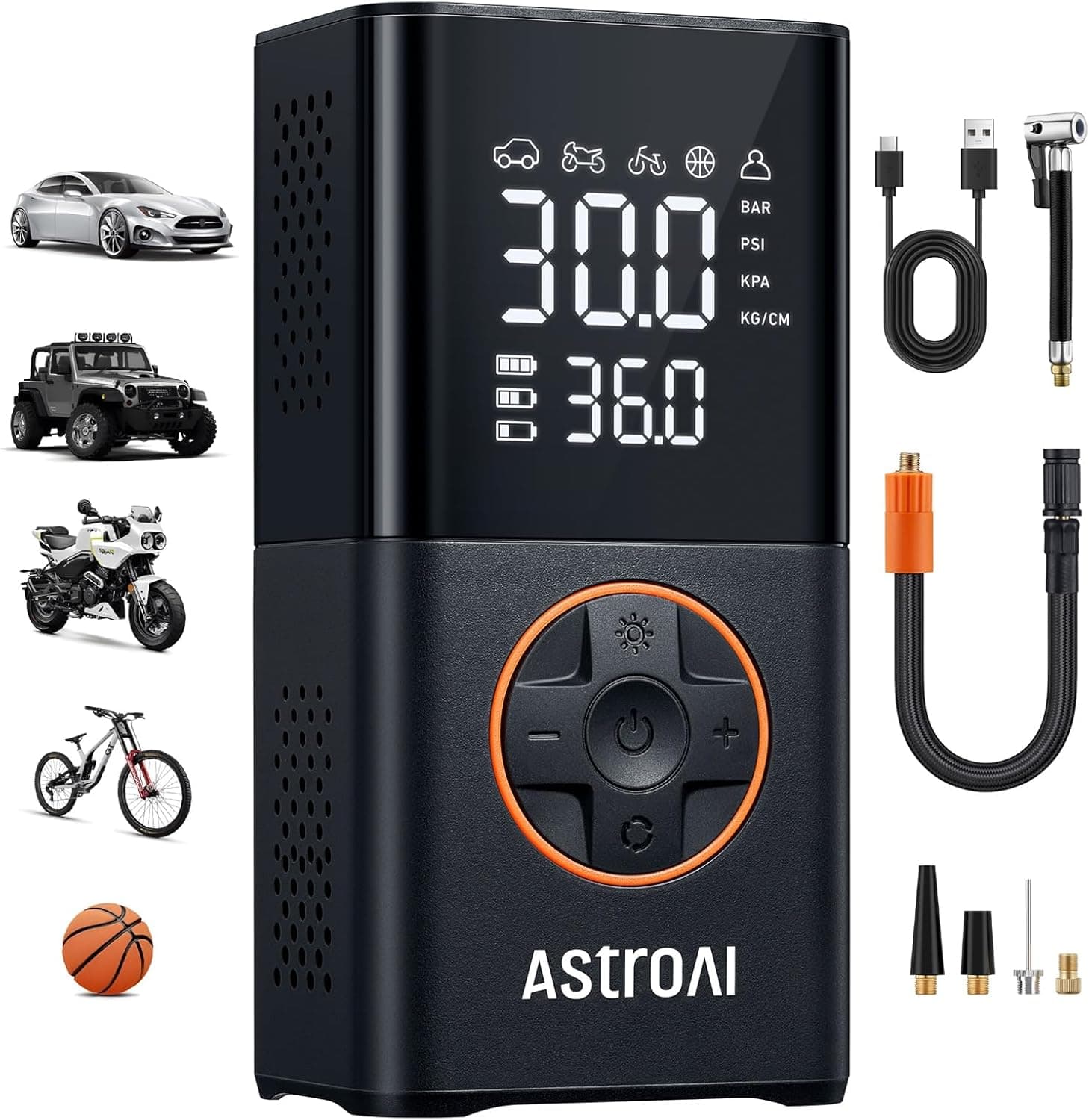
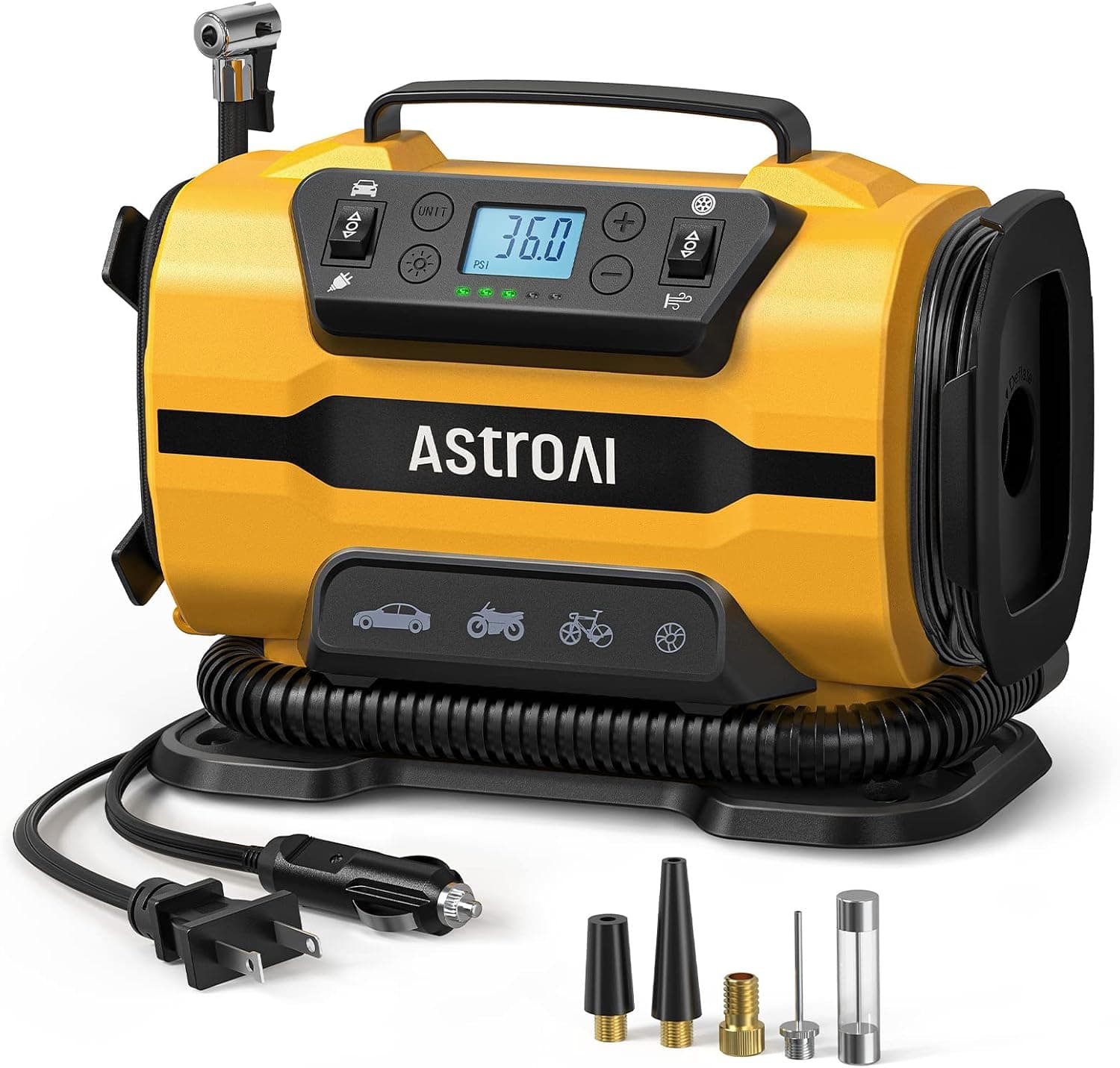
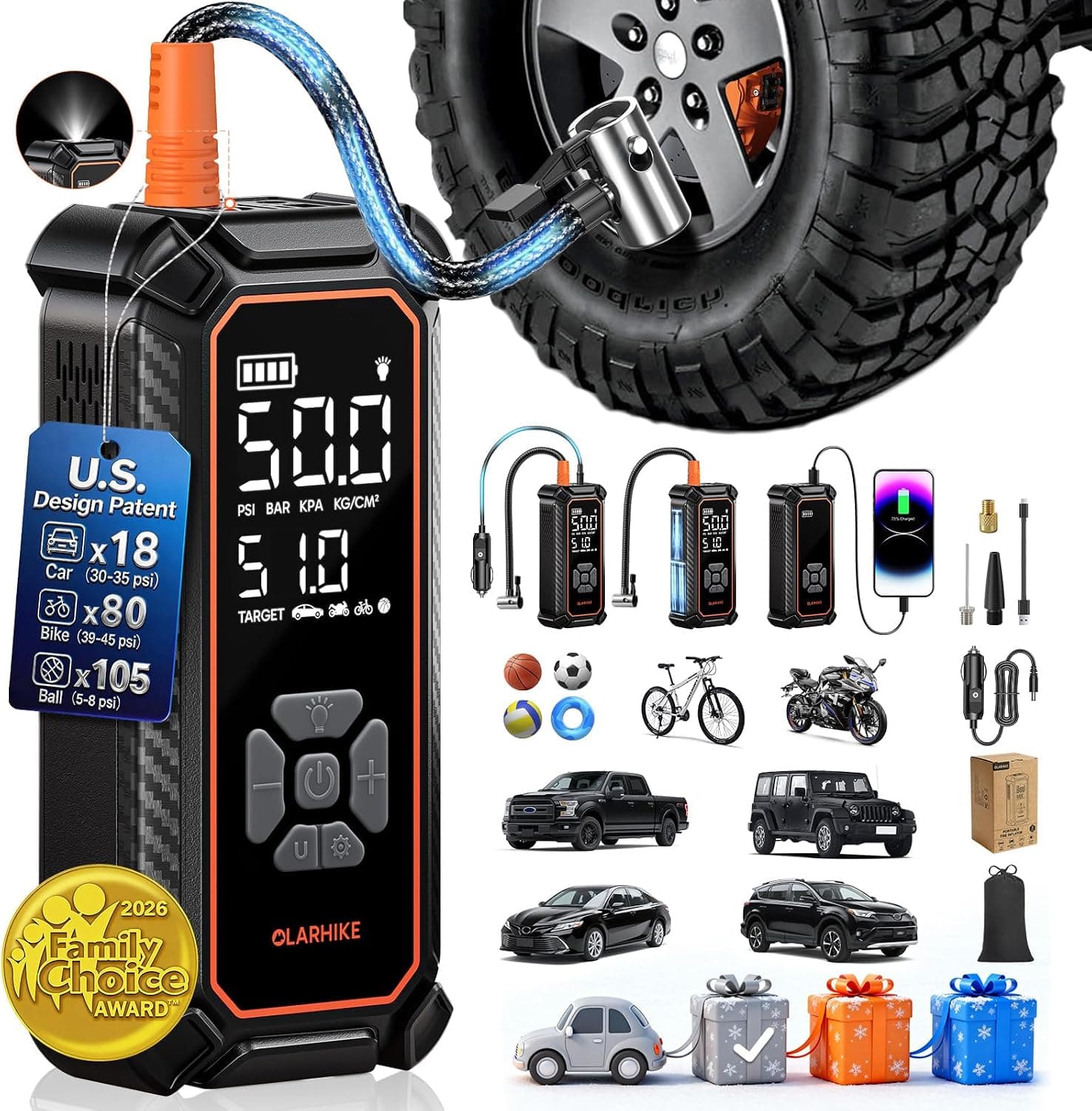
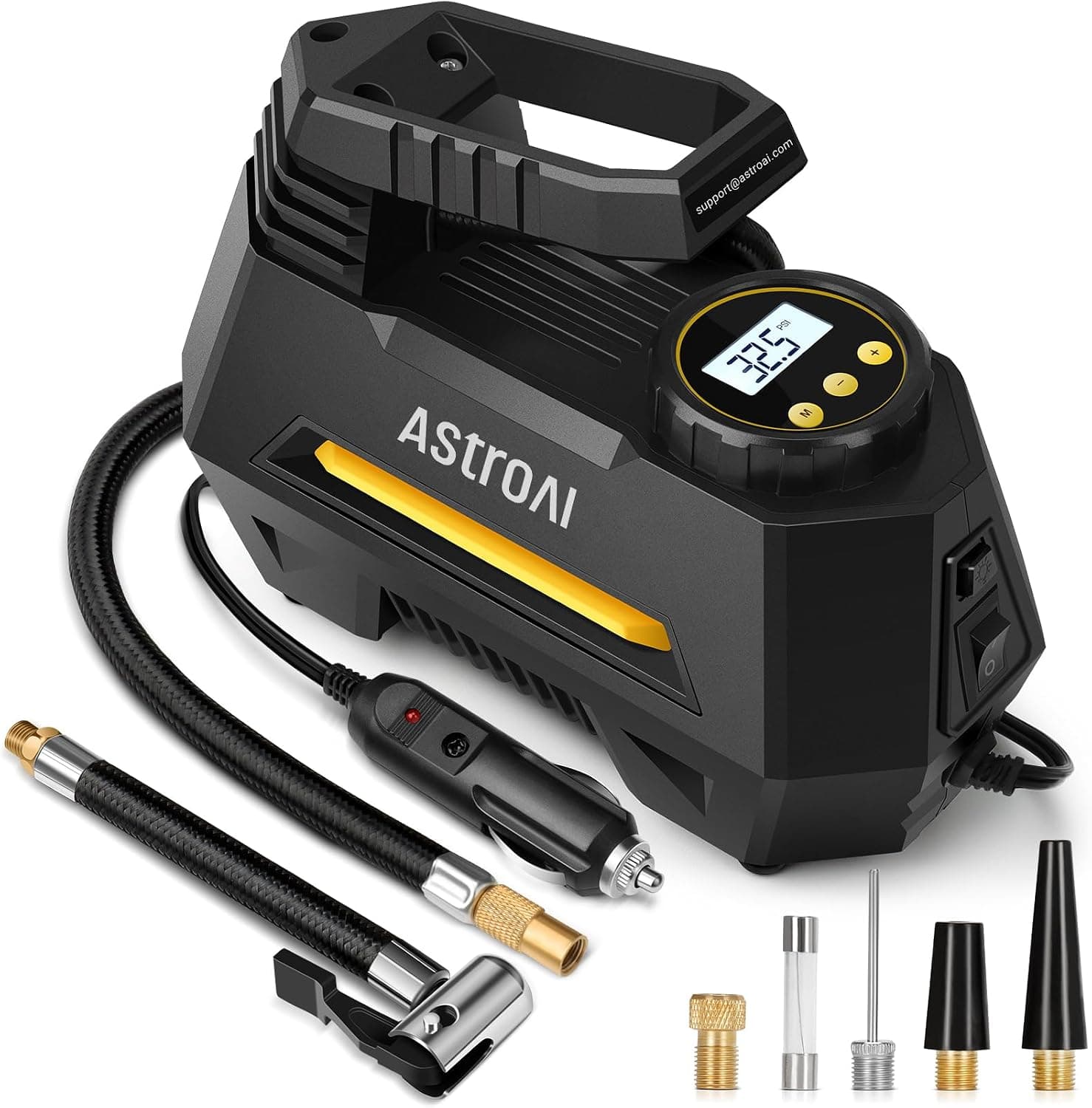
If you drive a car or crossover and just want fast, no-fuss top-offs, the AstroAI AIRUN H or the OlarHike cover the basics well. If you want a plug-in-anywhere unit that also handles air mattresses and sports gear, look at the AstroAI 12V/120V dual power. If you bike as much as you drive and want a cordless unit you can toss in a saddle bag, the AstroAI L7 is built for that. None of these four are rated for heavy-duty trucks or RVs — check your tire's max PSI before buying any small inflator.
Duty cycle matters more than max PSI
Every listing leads with a big pressure number, but the spec that actually determines whether an inflator survives a full four-tire job is duty cycle: how long it can run before it needs to cool down. Three of the four models here — the AstroAI dual power, the AstroAI L7, and the AstroAI AIRUN H — are rated for 15 minutes of continuous work followed by a mandatory 10-minute cooldown. That's plenty for topping off tires that are already close to spec, but if you're filling four tires from flat, plan on pausing partway through. The listing for the OlarHike doesn't state a duty cycle figure, so check the current listing or manual before assuming it can run non-stop.
Max PSI vs. what your tires actually need
Passenger car and SUV tires typically run 30-36 PSI. That's the range every unit here is built and tested around, and it's why the "fast fill" numbers on these listings (30 to 35 or 30 to 36 PSI in under two minutes) are the most relevant benchmark, not the headline max PSI. Max PSI matters for what the pump can push into a stiff sidewall, not for everyday refills. The OlarHike tops out at 51 PSI, which the listing explicitly flags as unsuitable for heavy-duty trucks or RVs. The AstroAI dual power model and AstroAI L7 both list 150 PSI ceilings, but their own copy still calls out that they're not for heavy-duty pickups. If you drive a 3/4-ton or larger truck, none of these four are the right category — you'd need a compressor built for that duty, and that's worth confirming directly with the seller before you buy.
Cordless vs. 12V vs. wall power
This is really a question of where you'll use the pump. A 12V-only unit like the AstroAI AIRUN H plugs into your car's outlet and draws power from the vehicle, so it never runs out of charge, but it's tethered to the car — its 9.8-foot cord is meant to reach all four tires without repositioning. A cordless design like the AstroAI L7 or OlarHike runs on a built-in rechargeable battery, so you can use it away from the car — on a bike, at a campsite, or on a flat tire on the shoulder before you've even started the engine. The AstroAI dual power unit splits the difference by accepting both a 12V car outlet and a 120V household plug, which is useful if you also want to inflate things in the garage or at home without draining a car battery.
Accuracy and auto shut-off
All four units here include a digital gauge and an auto shut-off that stops at a preset target, which is the feature that actually prevents over-inflation — not the display precision itself. The AstroAI L7 calls out a specific sensor sampling rate in its listing, which AstroAI markets as more consistent than typical budget gauges. For any of these, it's worth spot-checking the reading against a separate gauge once, since built-in sensors on this class of product can drift over time. What matters day to day is that you set the target, the pump stops there, and it remembers your last setting — a feature all four include.
OlarHike Tire Inflator Portable Air Compressor
- The appeal
- Inflates a car tire from 30 to 35 PSI in 55 seconds.
- The catch
- Maxes out at 51 PSI, so no heavy-duty trucks or RVs.

Cordless with a 12V backup cable, four preset modes, and a stated 51 PSI ceiling. Fits cars, SUVs (with a longer fill time), light pickups within that PSI limit, motorcycles, and bikes. A reasonable pick if you want one small pump that also handles balls and bike tires and don't need truck-level pressure.
AstroAI Tire Inflator Portable Air Compressor
- The appeal
- Refills 30 to 36 PSI in 1 minute via car outlet or wall plug.
- The catch
- 15-minute run limit, then a required 10-minute cooldown.
The only one of the four that plugs into a wall outlet as well as a car outlet, and the only one with a distinct high-volume mode for larger, low-pressure items like air mattresses. Good if you want one pump for both tires and inflatables around the house.
AstroAI L7 Tire Inflator Portable Air Compressor
- The appeal
- Refills a 195/65R15 tire from 30 to 36 PSI in 90 seconds.
- The catch
- 15-minute duty cycle, then a required 10-minute cooldown rest.
Cordless, under a pound, with a stated 4000mAh battery good for multiple tire fills per charge. Built-in flashlight with SOS and strobe modes. The most travel- and bike-oriented option of the group.
AstroAI AIRUN H Tire Inflator Portable Air Compressor
- The appeal
- Inflates a 195/65R15 tire from 30 to 36 PSI in under a minute.
- The catch
- Auto shut-off after 15 minutes; not for pool floats or mattresses.
12V-only, corded, with a 9.8-foot cord and a stated 2-year warranty. Listing notes it's not designed for high-volume inflatables like pool floats or mattresses — it's built specifically for tires.
What the listings don't tell you
None of these listings specify how the stated fill times were measured beyond the tire size and PSI range given, so treat those numbers as best-case rather than a guarantee across every tire and climate. Battery capacity and charge cycles for the cordless models will degrade with age, same as any lithium battery product — if longevity matters to you, check current buyer feedback on the listing before ordering. And because none of the four are rated for heavy-duty trucks or RVs, if that's your vehicle, look specifically for a compressor marketed to that category rather than assuming a higher PSI number on a car-focused pump will cover it.
Bottom line
For most car and SUV owners, duty cycle and real-world fill speed matter more than the max PSI printed on the box. The AstroAI AIRUN H and OlarHike are straightforward choices for daily car use, the AstroAI dual power model adds home-outlet flexibility, and the AstroAI L7 is the one to pick if bikes are part of your routine. Whichever you choose, confirm your tire's PSI requirements and duty-cycle needs against the current listing before buying — none of these four are built for heavy-duty trucks or RVs.
As an Amazon Associate, we earn from qualifying purchases.