BUYING GUIDE · September 15, 2026
Jump Starter vs. Battery Charger: Which One Do You Actually Need?
Jump starters crank a dead engine in seconds; chargers restore and maintain the battery itself — here's when each one, or both, makes sense.


Quick answer
A jump starter gets a dead battery running again in the moment; a battery charger (or maintainer) fixes the battery itself over hours so it stays healthy long-term. If your car won't start right now, you need a jump starter. If your battery keeps dying, or you have a vehicle that sits for weeks, you need a charger. Many drivers end up wanting both.
What each device actually does
A jump starter is a portable pack of stored energy — usually lithium now — that delivers a short, high-current burst to turn over an engine. It doesn't repair or recharge the battery; it just supplies enough amperage to crank the starter motor for a few seconds. Once the engine runs, the alternator takes over and slowly recharges the battery on its own.
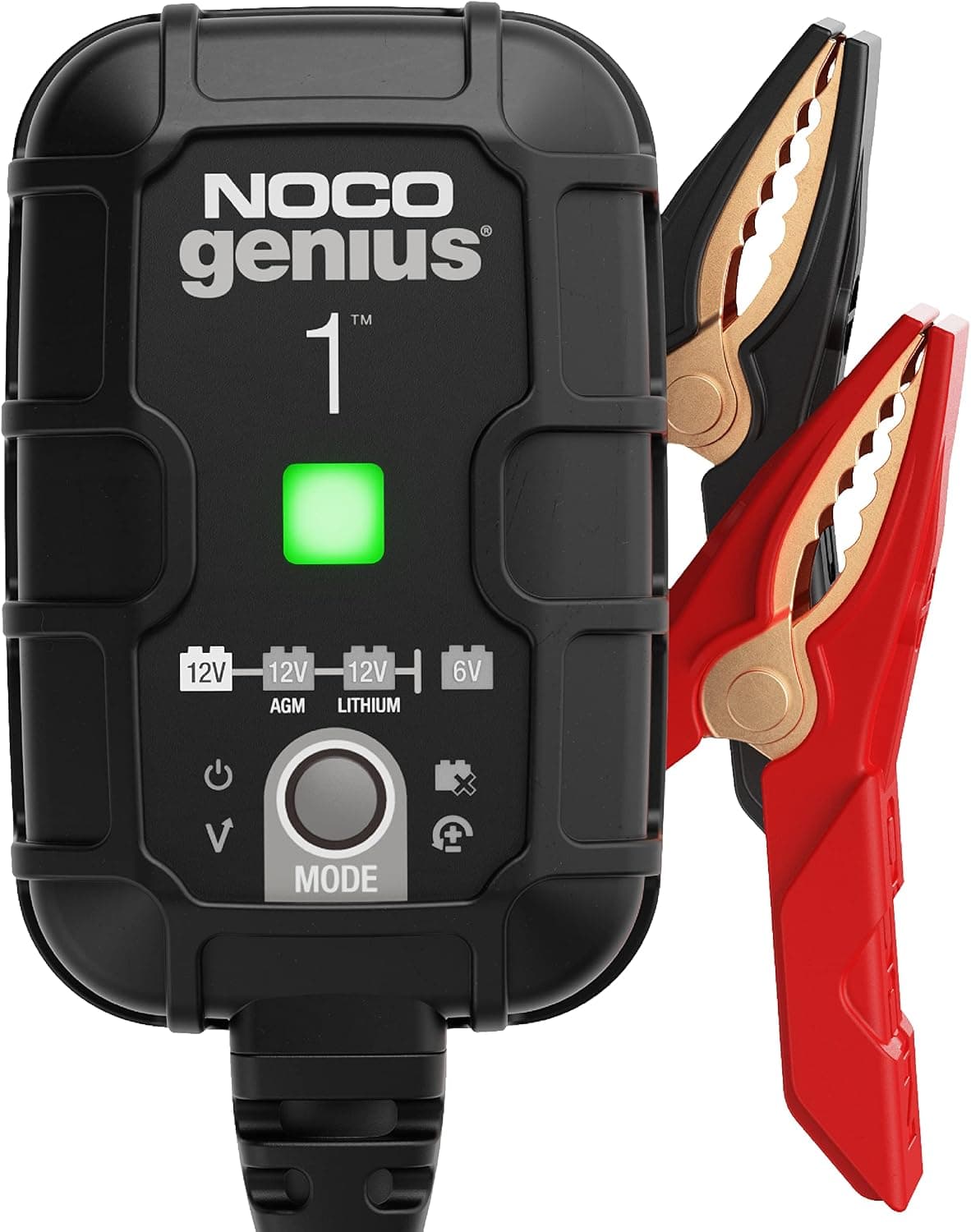
A battery charger works the opposite way: low current, delivered over a long time, to bring a battery back up to full charge or keep it there. A basic charger just charges. A "smart" charger or maintainer, like the NOCO GENIUS1 1A 6/12V Smart Battery Charger, also monitors the battery so it can be left connected indefinitely without overcharging, and can even reverse some of the sulfation that shortens battery life.
Peak amps vs. engine size: what actually matters for jump starters
The spec that decides whether a jump starter can crank your engine is peak amperage, not battery capacity. Bigger engines need more current to turn over, especially diesels and larger gas V6/V8s.
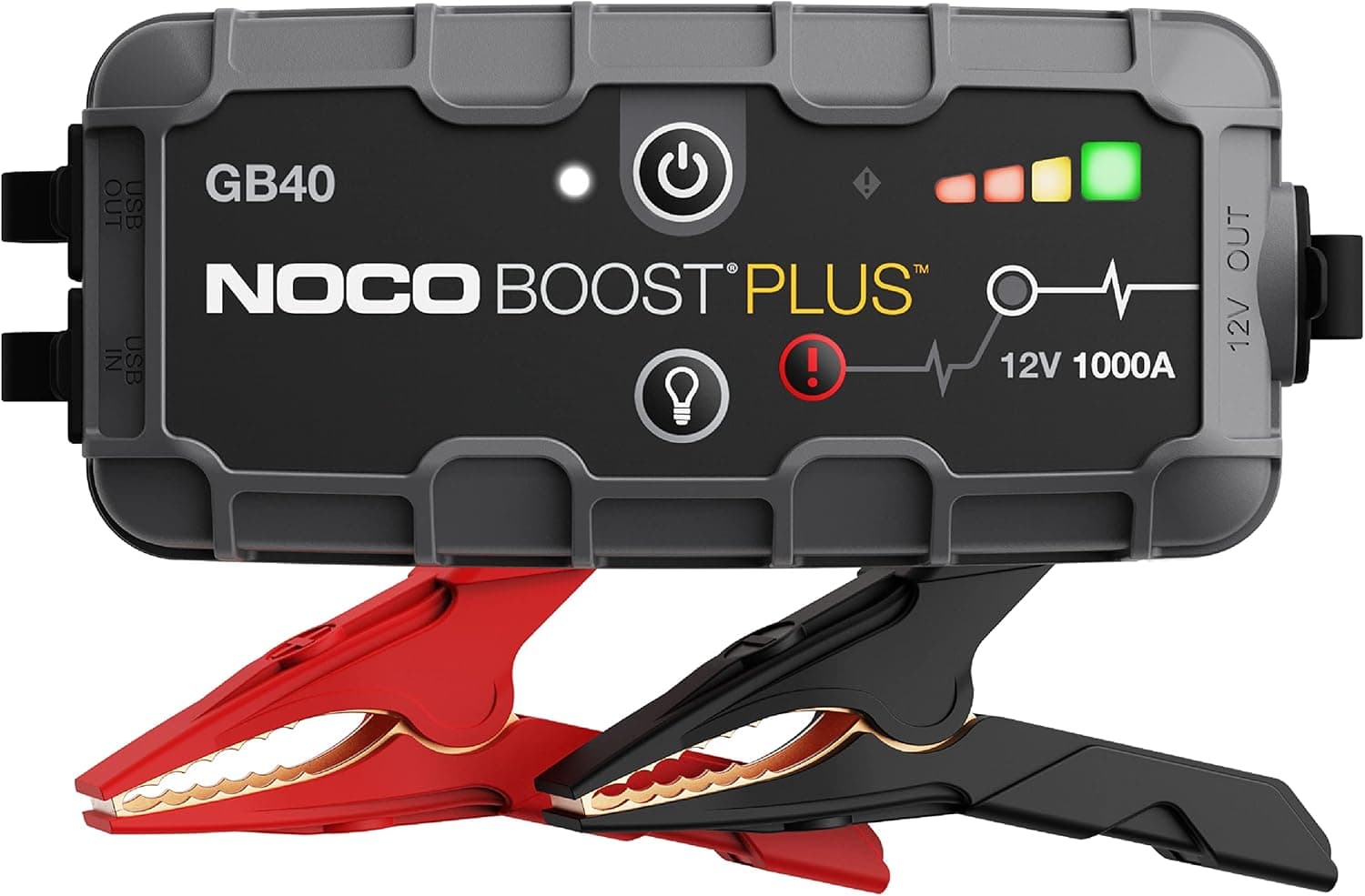
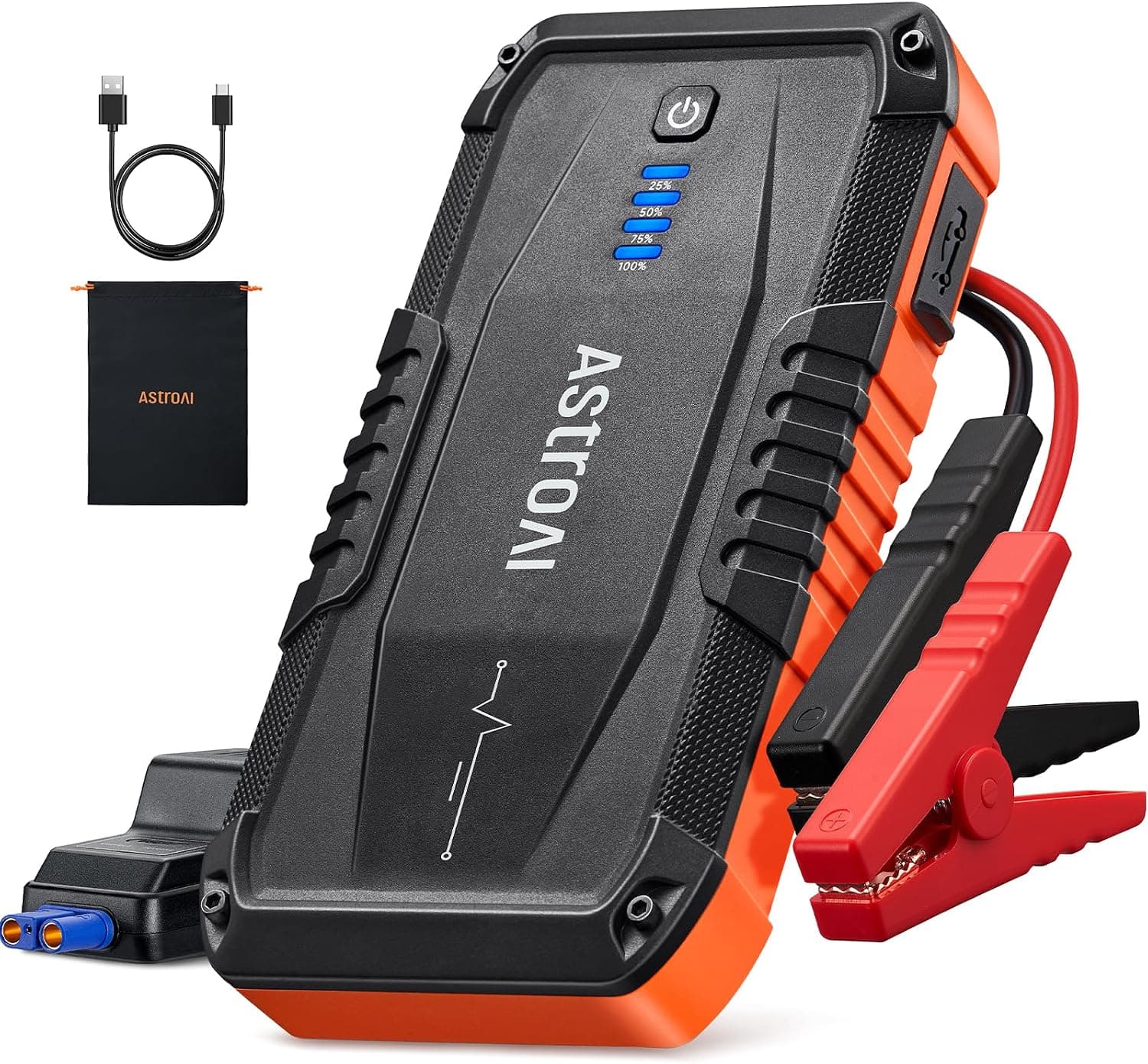
The NOCO Boost GB40 is rated for 1000 peak amps and is specced to start engines up to 6.0L gas or 3.0L diesel, with up to 20 starts per charge. The AstroAI S8 is rated higher at 1500 peak amps, though AstroAI lists the same practical ceiling — 6.0L gas and 3.0L diesel — for what it can start. In both cases, check your owner's manual or the battery's CCA (cold cranking amps) rating and compare it against the jump starter's peak amp spec before buying, especially if you drive a larger truck, diesel, or anything with a bigger displacement engine than these units are rated for.
Neither of these jump starters is meant to charge a battery over time. They're for the moment the car won't start, not for a battery that's slowly failing.
When a charger makes more sense than a jump starter
If your battery dies repeatedly, sits unused for weeks (a seasonal boat, motorcycle, RV, or a second car), or is old and weak rather than momentarily discharged, a charger addresses the actual problem. The GENIUS1 can bring a battery back from as low as 1 volt, and its Force Mode is designed to manually kick-start charging on batteries that have dropped all the way to 0 volts — something a jump starter cannot do, since a jump starter needs the vehicle's electrical system to already be intact enough to accept a boost.
The tradeoff is speed. At 1 amp of output, the GENIUS1 is built for maintenance and slow, gentle recovery, not for getting you back on the road in minutes. A deeply drained or large battery can take many hours to fully charge at this rate. If you need to move the car today, a jump starter is the faster fix; the charger is the fix that prevents the next dead battery.
Lithium safety features worth checking
Both jump starters reviewed here use lithium batteries, and lithium jump packs carry different safety considerations than the old lead-acid boxes. The GB40 uses what NOCO calls UltraSafe technology, with spark-proof and reverse-polarity protection built into the clamp connection, so an incorrect hookup doesn't create a spark or damage the pack. The S8 lists eight separate protections, including reverse polarity, overcurrent, overvoltage, overload, overcharge, over-discharge, and short-circuit protection.
One point worth noting from AstroAI's own material: lithium battery performance drops in extreme cold. If you live somewhere with harsh winters and plan to keep a jump starter in an unheated trunk, this is worth checking on the listing and in the manual, since cold-soaked lithium cells generally deliver less peak current than their rated spec.
NOCO Boost GB40 12V 1000A UltraSafe Portable Lithium Jump Starter
- The appeal
- 1000A peak lithium starts 6.0L gas or 3.0L diesel engines, 20x per charge.
- The catch
- Only 2150mAh battery capacity, needs occasional top-offs when idle.

Rated for 1000 peak amps, enough for engines up to 6.0L gas or 3.0L diesel, with roughly 20 starts per charge from its 2150mAh cell. It also works as a phone power bank and has a 100-lumen flashlight with SOS and strobe modes. At about 2.5 lb, it's compact, though the smaller battery capacity means it benefits from an occasional top-off if it sits unused for a long stretch.
AstroAI S8 Car Battery Jump Starter 1500A - Portable 12V Lithium Jump Box
- The appeal
- 1500A peak current starts 6.0L gas and 3.0L diesel engines.
- The catch
- Lithium battery performance drops in extreme cold, per AstroAI's own warning.
Rated higher on paper at 1500 peak amps, also covering 6.0L gas and 3.0L diesel engines. It includes a smart boost mode that detects low voltage and unlocks a boost button for fully drained batteries, plus the eight-point protection system above. At 0.95 lb and a compact footprint, it's easy to stash in a glove box, but keep AstroAI's cold-weather performance note in mind if you're jump-starting in freezing conditions.
NOCO GENIUS1 1A 6/12V Smart Battery Charger
- The appeal
- Charges dead batteries from 1 volt; Force Mode revives 0V batteries.
- The catch
- Only 1 amp output, slow for large or deeply drained batteries.
Built for 6V and 12V lead-acid and lithium-ion (LiFePO4) batteries, including AGM, gel, and deep-cycle types. Its thermal sensor adjusts charging for ambient temperature, and it's designed to stay connected long-term as a maintainer without overcharging. The tradeoff is its 1 amp output, which makes it a slow, careful tool rather than a fast fix — it's built to restore and maintain, not to get you moving in the next ten minutes.
Bottom line
Buy a jump starter if your immediate problem is a car that won't turn over: the NOCO Boost GB40 and the AstroAI S8 both cover engines up to 6.0L gas or 3.0L diesel, with the S8 rated for more peak amps and the GB40 built around NOCO's spark-proof clamp system. Buy a charger like the NOCO GENIUS1 if the real issue is a battery that keeps losing charge, sits idle for long periods, or needs to be brought back from a very low voltage. If you own a seasonal vehicle or one that's had recent battery trouble, keeping both in the garage covers the emergency and the underlying cause.
As an Amazon Associate, we earn from qualifying purchases.